
🤖 The Tangible Intelligence: How AI is Reshaping Products in 2026
For decades, AI was something we “talked” to through a keyboard or a voice assistant. In 2026, the biggest trend in the tech industry is Embodied AI—giving artificial intelligence a physical body to interact with the world around us.
1. Beyond the Screen: Modular Robotics
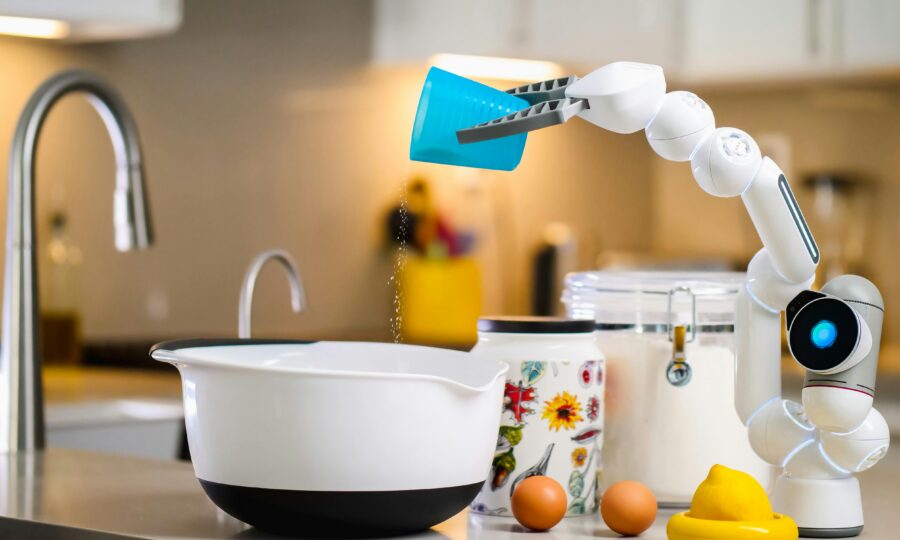
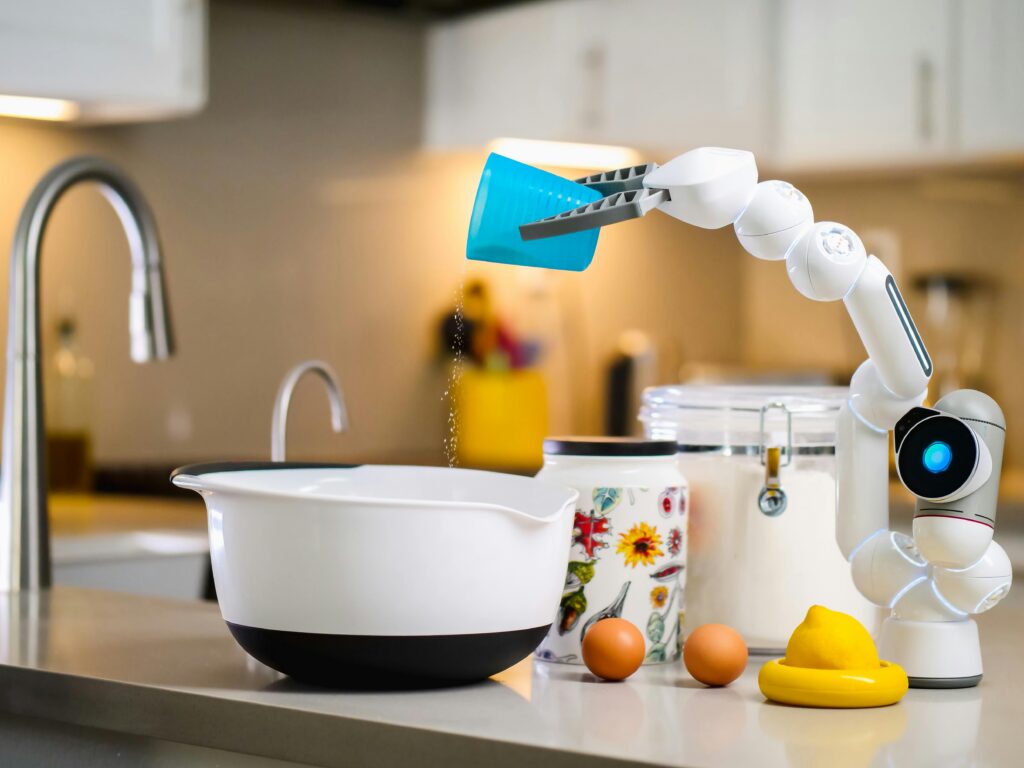
As seen in the image, the shift is toward modular robotic assistants. Unlike the bulky, fixed industrial robots of the past, 2026 products are:
- Context-Aware: Using advanced computer vision to distinguish between a pinch of salt and a teaspoon of sugar.
- Collaborative: Designed to work with humans (Cobots) rather than replacing them, assisting in tasks that require high precision or repetitive motion.
2. The Rise of “Smart Matter”
AI is being embedded directly into materials. We are seeing products like:
- Adaptive Fabric Wearables: Gym gear that uses AI to sense muscle fatigue and adjusts its compression levels in real-time to prevent injury.
- Self-Healing Surfaces: Kitchen countertops and smartphone screens that use AI-driven chemical triggers to “heal” scratches within minutes.
3. Hyper-Personalization through AI
In 2026, a “product” is no longer the same for everyone. AI allows for:
- Generative Design: Products like sneakers and chair frames are now 3D-printed using AI algorithms that analyze your specific bone structure and weight distribution for a 1:1 fit.
- Dynamic UI: Smart appliances that change their interface based on who is standing in front of them, simplifying the controls for a child while showing advanced telemetry for a professional.
4. Sustainability & The “Circular” AI
AI is now the primary tool for solving the e-waste crisis.
- Autonomous Disassembly: New electronics are designed to be taken apart by AI-powered robots (like the one in your photo) to recover precious metals with 99% efficiency.
- Predictive Maintenance: AI sensors in your appliances tell you exactly which part will fail before it happens, allowing for a “repair-first” consumer culture.